
Aluminum vs. Wrought Iron Fence: Which Metal Fence Fits a Carmel Home?
They look nearly identical from the curb, but aluminum and wrought iron behave very differently over twenty years. Here is how the two metal fences compare on rust, upkeep, strength, cost, and Carmel's own fence rules.
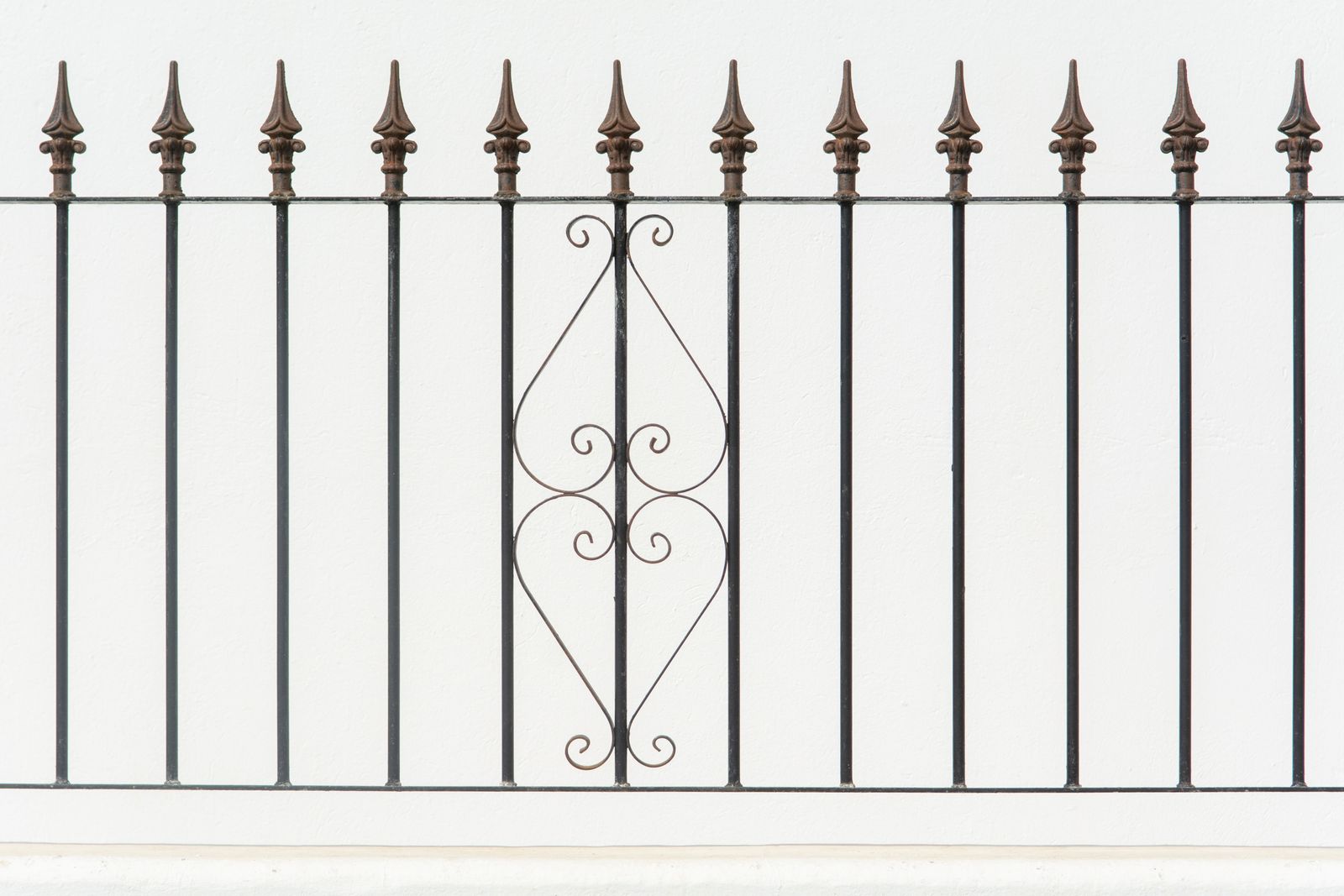
Drive through Carmel neighborhoods like the Village of WestClay or the streets near the Monon Greenway and the same silhouette shows up again and again: slim black pickets with pointed tops wrapping a front yard or a backyard pool. Most homeowners call all of it wrought iron, but the fence you are usually looking at is aluminum. The two are easy to confuse from the curb, and easy to mix up when you are pricing a project. Choosing between an aluminum fence and a wrought iron fence changes what you pay up front, how much upkeep you sign up for, and how the fence looks after a decade of Indiana winters. Here is how the two metals actually compare for a Carmel home.
The Short Version
Most black ornamental fences installed in Carmel today are aluminum, not true wrought iron.
Aluminum will not rust, needs almost no maintenance, and costs less to install than iron.
Wrought iron (really welded steel today) is stronger and more ornate, but it rusts without a coating and needs periodic upkeep.
Both styles satisfy Carmel's rule that a front-yard fence be no taller than 42 inches and at least 25 percent open.
For most residential yards and pool enclosures, aluminum is the practical choice; iron earns its price on high-security or custom estate projects.
What an Aluminum Fence Actually Is
An aluminum fence is an ornamental metal fence built from extruded aluminum pickets and rails, powder-coated (usually gloss black) to mimic the look of iron at a fraction of the weight. It is the fence most Carmel homeowners picture when they say wrought iron: the spear-top pickets around pools, front yards, and side gates. Because aluminum forms a thin, self-healing oxide layer that blocks further corrosion, it does not rust the way iron does, even where soil, mulch, or sprinkler spray keep the base of the posts damp (U.S. Defense Systems Information Analysis Center).
The trade-off is strength. Aluminum pickets are hollow and lighter than steel, so a determined impact — a car bumper, a falling limb, a large dog throwing its weight against a gate — can bend a rail that solid iron would shrug off. For a standard residential perimeter that is rarely a problem, and the powder-coated finish means the fence looks much the same in year ten as it did on install day with nothing more than an occasional rinse.
What a Wrought Iron Fence Actually Is
A wrought iron fence is a solid metal fence forged or, far more often today, welded from steel stock into pickets, rails, and decorative scrolls. True hand-worked wrought iron is now rare and expensive; what most installers call wrought iron is custom welded steel, prized for its weight, rigidity, and the ornate detail you cannot replicate in hollow aluminum. It is the right material when security or a one-of-a-kind design matters more than the budget.
The catch is corrosion. Bare iron and steel oxidize in open air, so an iron-style fence lives or dies by its coating. Galvanizing the steel before it is painted forms a stable zinc patina that shields the metal beneath it and buys years of service life (American Galvanizers Association). Skip that step, or let a chip go unrepaired, and rust creeps in at welds, joints, and the ground line — exactly the spots an Indiana freeze-thaw cycle works hardest.
Rust and Weather: How Each Holds Up in Indiana
In Carmel's climate, corrosion is the dividing line between the two metals. Hamilton County sees humid summers, hard freezes, and repeated freeze-thaw swings, plus road and sidewalk de-icing salt that drifts onto fences near driveways and corners. Aluminum is effectively immune to all of it; the oxide layer re-forms on its own wherever the surface is scratched. A steel fence, by contrast, needs its coating intact everywhere to survive the same conditions.
That difference shows up as maintenance. An aluminum fence asks for little more than a hose-down a couple of times a year. A wrought iron fence should be checked for chips and surface rust, spot-primed, and repainted every few years — more often on the salt-exposed sections. Neither is hard to live with, but one is genuinely set-and-forget and the other is an ongoing, if modest, chore.
Not sure which metal your yard calls for?
We will walk your perimeter and look at your grade, pool, and corners, then tell you honestly whether aluminum or iron is the better buy for your project — with your footage priced on the spot.
Book a free measure — (317) 597-6488Head to Head: Cost, Maintenance, Strength, and Looks
On the dimensions most Carmel homeowners weigh, the two metals split cleanly:
Rust resistance: aluminum does not rust, while steel rusts wherever its coating fails. Advantage aluminum.
Maintenance: aluminum needs an occasional rinse; iron needs periodic inspection, spot-priming, and repainting. Advantage aluminum.
Strength and security: solid steel resists impact and prying far better than hollow aluminum. Advantage iron.
Cost: industry cost data consistently puts ornamental aluminum below welded iron per linear foot, before any custom detailing. Advantage aluminum.
Looks and customization: both give you the classic black-picket profile, but only iron supports heavy scrollwork and fully bespoke panels. Advantage iron for custom work.
Lifespan: a quality aluminum fence can outlast a neglected iron one simply because it never corrodes, while a well-maintained iron fence can last generations.
Where cost is the deciding factor, remember these are national material-and-install ranges, not a quote; your own number depends on footage, grade, gates, and terrain. Our guide to fence installation cost in Carmel walks through what moves the price on a real bid.
If you are fencing a pool or a standard front or back yard and want to install it once and forget it, aluminum is almost always the smarter spend. Save true iron for the projects where strength or a custom design is the whole point.
Meeting Carmel's Fence Rules with Ornamental Metal
Carmel's fence code happens to favor exactly this style of fence in the front yard. A fence in any required front yard may be no taller than 42 inches and must be at least 25 percent open for visibility — a requirement the ordinance itself describes as the wrought iron or picket look (City of Carmel fence regulations). An ornamental aluminum or iron fence clears that bar effortlessly, where a solid privacy panel would not.
A few other local rules apply to any metal fence here. Carmel requires an Improvement Location Permit before you install a new fence on most residential lots, caps side and rear fences at six feet, and keeps fences out of the corner vision-clearance triangle at intersections. Pool enclosures carry their own barrier and self-latching-gate requirements, which is part of why ornamental metal — easy to meet code with, hard to climb — is the default around Carmel pools. For how placement and property lines work, see our guide to fence setbacks in Carmel.
When Aluminum Wins, and When Wrought Iron Is Worth It
For the large majority of Carmel homes, aluminum is the better fit: it delivers the iron look, shrugs off the weather, needs almost no upkeep, meets the front-yard code, and installs for less. It is especially well suited to pool surrounds, sloped yards (where rackable panels follow the grade), and HOA neighborhoods that want a uniform black-picket appearance.
Wrought iron earns its premium in narrower cases: a high-security perimeter, a commercial or estate entrance, a historic home where solid metal and hand-detailed scrollwork are part of the character, or a heavy automated gate that benefits from steel's rigidity. If none of those describe your project, the extra cost and the repainting schedule are buying you more than you need.
What Decides It on Your Lot
The honest tie-breaker is rarely looks, since both fences read as the same classic black picket from the street — it is how you want to spend the next twenty years. If you would rather never think about the fence again, aluminum is the answer; if strength, security, or a custom design drives the project, iron is worth the upkeep. Walk your yard with those two priorities in mind, note where salt, slopes, or a pool come into play, and the choice usually makes itself. When you want a second opinion grounded in your actual grade and footage, the team at Fence Installation Carmel can talk through ornamental iron and aluminum fence installation and which metal fits your lot.
Price Your Carmel Metal Fence in One Visit
Tell us the yard and the look you are after. We stake the line, measure the footage, and leave you a written, itemized price for aluminum or iron — no charge, no pressure.